
Carotid Artery Disease occurs when the carotid arteries—the major blood vessels that supply oxygen-rich blood to the brain—become narrowed or blocked by plaque buildup. This condition can significantly increase the risk of transient ischemic attacks (TIAs), commonly called “mini-strokes,” and full strokes.
At Advanced Vein & Vascular, our vascular specialists provide comprehensive diagnostic evaluations and advanced treatment options to help reduce stroke risk, restore healthy blood flow, and protect your long-term health.
What Is Carotid Artery Disease?
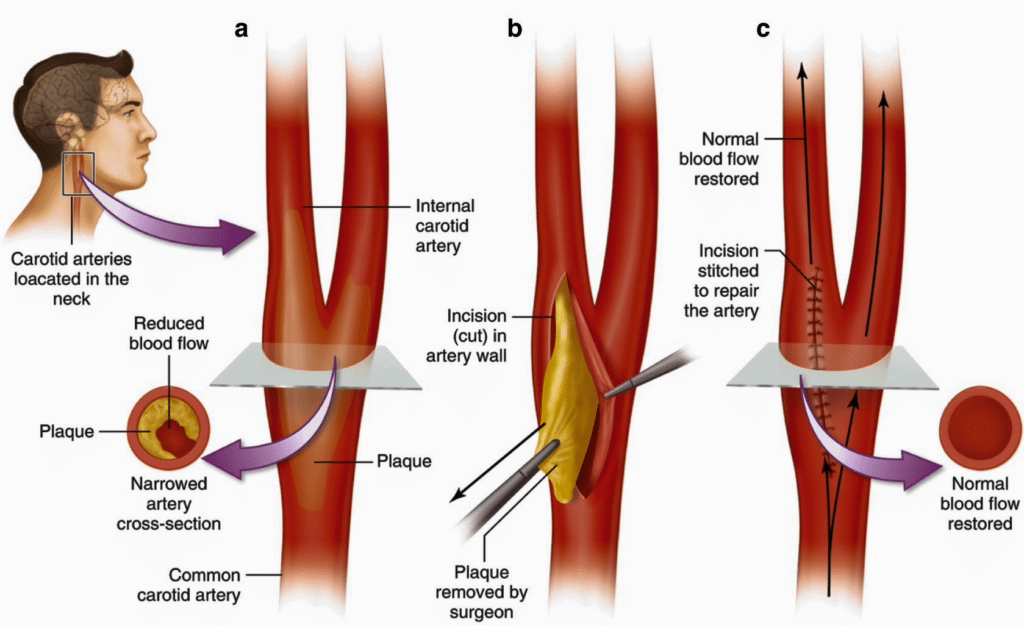
Carotid Artery Disease develops when fatty deposits, cholesterol, and other substances accumulate within the carotid arteries, causing them to narrow. This process, known as atherosclerosis, restricts blood flow to the brain and can lead to serious neurological complications.
In some cases, plaque can rupture and form a blood clot that travels to the brain, causing a stroke.
Because Carotid Artery Disease often develops gradually and may not produce symptoms until significant blockage occurs, regular vascular evaluations can play a critical role in early detection.
Symptoms of Carotid Artery Disease
Many patients experience no symptoms until a TIA or stroke occurs. Warning signs may include:
- Sudden weakness or numbness on one side of the body
- Difficulty speaking or understanding speech
- Sudden vision loss in one or both eyes
- Dizziness or loss of balance
- Sudden severe headache
- Facial drooping
- Temporary blindness in one eye (amaurosis fugax)
- Confusion or memory difficulties
Any signs of a stroke or TIA require immediate medical attention.
Call 911 immediately if you experience sudden stroke symptoms.
What Causes Carotid Artery Disease?
The most common cause of Carotid Artery Disease is atherosclerosis, which occurs when plaque builds up inside the artery walls.
Risk factors include:
- High blood pressure
- High cholesterol
- Smoking
- Diabetes
- Obesity
- Physical inactivity
- Family history of vascular disease
- Advanced age
- Coronary artery disease
- Peripheral artery disease (PAD)
Patients with these risk factors may benefit from routine vascular screenings to identify problems before symptoms develop.
How Is Carotid Artery Disease Diagnosed?
Early diagnosis is critical for preventing stroke and other serious complications.
Our specialists may recommend:
Comprehensive Vascular Evaluation
A thorough review of your symptoms, medical history, cardiovascular risk factors, and family history.
Carotid Ultrasound
A noninvasive ultrasound examination that evaluates blood flow through the carotid arteries and identifies narrowing or blockages.
CT Angiography (CTA)
Advanced imaging that provides detailed views of the carotid arteries and surrounding vascular structures.
MR Angiography (MRA)
Magnetic resonance imaging used to assess blood flow and identify arterial narrowing.
Diagnostic Angiography
In some cases, angiography may be used to obtain highly detailed images for treatment planning.
Carotid Artery Disease Treatment Options
Treatment depends on the degree of narrowing, symptoms, overall health, and stroke risk.
Carotid Endarterectomy (CEA)
Carotid Endarterectomy is a surgical procedure that removes plaque buildup from the carotid artery to restore normal blood flow.
This procedure is often recommended for patients with significant carotid artery narrowing and can substantially reduce the risk of stroke.
Benefits include:
- Improved blood flow to the brain
- Reduced stroke risk
- Long-term vascular protection
- Proven effectiveness for severe carotid stenosis
Lifestyle Modifications & Medical Management
For mild to moderate disease, treatment may include:
- Smoking cessation
- Blood pressure control
- Cholesterol management
- Diabetes management
- Weight loss
- Regular exercise
- Antiplatelet medications
- Statin therapy
These measures help slow disease progression and reduce stroke risk.
Carotid Artery Stenting (CAS)
For certain patients, carotid artery stenting may be an alternative to surgery.
During this minimally invasive procedure:
- A catheter is inserted through a small incision.
- A balloon may be used to widen the narrowed artery.
- A stent is placed to keep the artery open and maintain blood flow.
Carotid stenting may be recommended for patients who are not ideal candidates for open surgery.
Benefits include:
- Minimally invasive approach
- Smaller incision
- Faster recovery
- Reduced hospital stay
Benefits of Early Treatment
Early diagnosis and treatment of Carotid Artery Disease can help:
- Reduce stroke risk
- Improve blood flow to the brain
- Prevent transient ischemic attacks (TIAs)
- Protect neurological function
- Reduce cardiovascular complications
- Improve long-term health outcomes
- Provide peace of mind through proactive care
Why Choose Advanced Vein & Vascular?
At Advanced Vein & Vascular, we specialize in comprehensive vascular care using advanced diagnostic technology and evidence-based treatment approaches.
Patients trust our team because we offer:
- Board-certified vascular specialists
- Comprehensive stroke-risk assessments
- Advanced vascular imaging
- Minimally invasive treatment options
- Personalized treatment plans
- Compassionate, patient-focused care
Our goal is to help patients reduce stroke risk and maintain lifelong vascular health.
Schedule Your Carotid Artery Disease Consultation in Dallas, TX
If you have risk factors for vascular disease, a history of TIA or stroke symptoms, or concerns about carotid artery health, early evaluation can help identify problems before serious complications occur.
Contact Advanced Vein & Vascular today to schedule a comprehensive vascular evaluation and learn about your treatment options.