
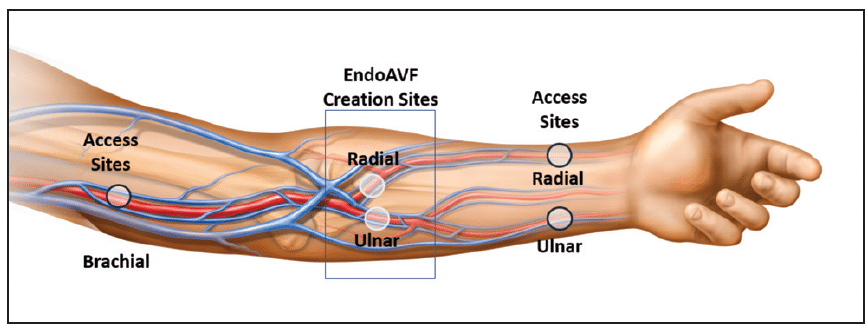
An Arteriovenous (AV) Fistula is a surgically created connection between an artery and a vein, most commonly in the arm, that provides long-term vascular access for hemodialysis. AV fistulas are considered the preferred form of dialysis access because they offer excellent blood flow, lower infection rates, and greater long-term durability compared to other access options.
At Advanced Vein & Vascular, our vascular specialists provide comprehensive AV fistula creation, maintenance, and treatment services to help patients receive safe, effective dialysis care.
What Is an AV Fistula?
An AV fistula is created by connecting an artery directly to a nearby vein. Over time, the increased blood flow causes the vein to enlarge and strengthen, making it suitable for repeated dialysis treatments.
This access point allows dialysis machines to efficiently remove and return blood during treatment sessions.
AV fistulas are often recommended for patients with:
- Chronic kidney disease (CKD)
- End-stage renal disease (ESRD)
- Patients preparing for long-term hemodialysis
- Individuals transitioning from temporary dialysis access
Because fistulas require time to mature before use, early planning is important.
Why Is an AV Fistula Preferred for Dialysis?
Compared to dialysis catheters and synthetic grafts, AV fistulas offer several advantages:
- Lower risk of infection
- Better blood flow during dialysis
- Reduced risk of clotting
- Longer lifespan
- Fewer complications
- Improved dialysis efficiency
- Reduced need for repeat procedures
For many patients, an AV fistula provides the most reliable long-term dialysis access option.
Signs of AV Fistula Problems
While AV fistulas are durable, complications can occasionally develop.
Symptoms that may indicate a fistula issue include:
- Swelling of the arm or hand
- Prolonged bleeding after dialysis
- Decreased dialysis efficiency
- Weak or absent “thrill” (vibration over the fistula)
- Pain near the access site
- Redness or signs of infection
- Enlarging aneurysm at the access site
- Difficult needle placement during dialysis
Prompt evaluation can help prevent access failure and maintain effective dialysis treatment.
Common AV Fistula Complications
Stenosis (Narrowing)
Scar tissue or vessel narrowing may reduce blood flow through the fistula, leading to dialysis difficulties.
Thrombosis (Clotting)
Blood clots can block the fistula and interrupt dialysis access.
Aneurysm Formation
Repeated needle access may cause portions of the fistula to enlarge or weaken over time.
Infection
Although less common than with dialysis catheters, infections can still occur and require prompt treatment.
Steal Syndrome
In rare cases, excessive blood flow through the fistula can reduce circulation to the hand, causing pain, numbness, or weakness.
How Is an AV Fistula Evaluated?
Our specialists use advanced diagnostic testing to assess fistula function and identify potential complications.
Comprehensive Vascular Evaluation
Review of your dialysis history, symptoms, and overall vascular health.
Vascular Ultrasound
A noninvasive ultrasound exam evaluates blood flow, identifies narrowing, and assesses fistula maturation.
Fistulogram (Dialysis Access Angiography)
Specialized imaging provides detailed visualization of the dialysis access circuit and helps guide treatment decisions.
AV Fistula Services We Offer
AV Fistula Creation
For patients preparing for dialysis, our vascular specialists perform AV fistula creation procedures designed to provide reliable long-term access.
Common fistula locations include:
- Radiocephalic fistula (wrist)
- Brachiocephalic fistula (upper arm)
- Brachiobasilic fistula (upper arm)
The best location depends on your vascular anatomy and treatment needs.
AV Fistula Maintenance & Surveillance
Routine monitoring helps identify problems before access failure occurs.
Regular surveillance may include:
- Physical examination
- Blood flow assessment
- Ultrasound imaging
- Access function evaluation
Early detection often allows for minimally invasive correction of developing issues.
Balloon Angioplasty for AV Fistula Stenosis
When narrowing develops, angioplasty may be used to restore blood flow.
During the procedure:
- A catheter is inserted into the access site.
- A small balloon is inflated within the narrowed area.
- Blood flow is improved without major surgery.
Benefits include:
- Minimally invasive treatment
- Outpatient procedure
- Improved dialysis performance
- Preservation of existing access
AV Fistula Thrombectomy
If a clot forms within the fistula, thrombectomy procedures may restore blood flow and preserve the access site.
Prompt treatment is often critical to preventing permanent fistula failure.
AV Fistula Revision
In some cases, surgical revision may be necessary to repair aneurysms, improve blood flow, or correct structural issues affecting dialysis access.
Benefits of Expert AV Fistula Care
Proper fistula management can help:
- Improve dialysis efficiency
- Reduce access complications
- Prevent access failure
- Minimize hospitalizations
- Extend fistula lifespan
- Improve overall quality of life
- Support long-term kidney care
Why Choose Advanced Vein & Vascular?
At Advanced Vein & Vascular, we provide comprehensive dialysis access care using advanced diagnostic technology and minimally invasive treatment techniques.
Patients choose our team because we offer:
- Board-certified vascular specialists
- Expertise in dialysis access management
- Advanced vascular imaging
- Minimally invasive treatment options
- Personalized care plans
- Ongoing access monitoring and maintenance
We work closely with nephrologists and dialysis centers to help patients maintain reliable dialysis access and achieve the best possible outcomes.
Schedule Your AV Fistula Consultation in Dallas, TX
Whether you need dialysis access creation, routine surveillance, or treatment for a fistula complication, our vascular specialists are here to help.